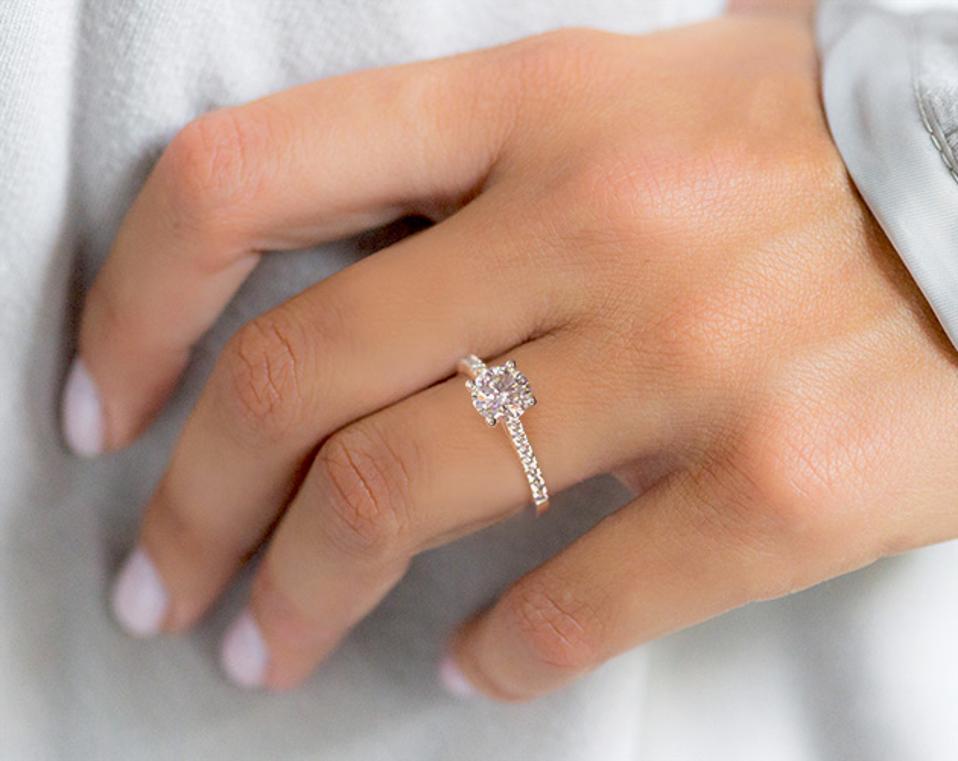
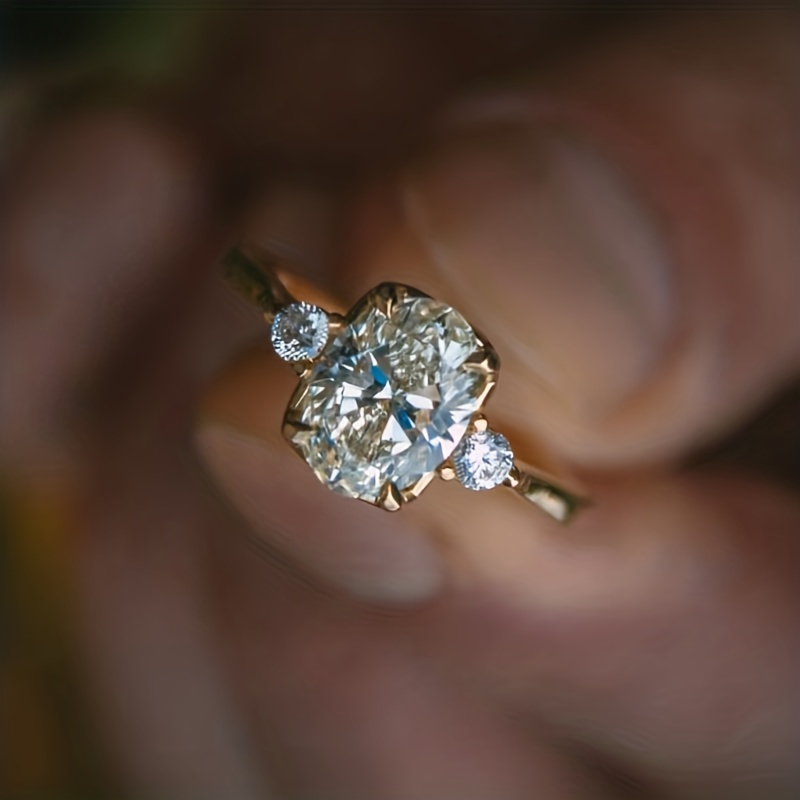
A white gold ring can look almost identical to platinum at first glance, yet the two metals behave differently over years of wear. That difference matters if the ring will be worn daily, paired with a diamond, or eventually sit beside a wedding band.
For buyers researching white gold rings Singapore, the useful questions go beyond appearance. Gold purity, alloy composition, rhodium plating, setting design, diamond colour, ring width, maintenance, and sizing can all affect how the finished piece looks and wears.
Understanding those details before ordering makes it easier to choose a ring that suits both the stone and the person wearing it.
White Gold Is an Alloy, Not Naturally White Gold
Pure gold has a rich yellow colour and is too soft for many everyday jewellery applications. White gold is produced by combining gold with lighter-coloured alloying metals to create a harder, paler material suitable for rings.
The karat indicates how much pure gold is present.
18K white gold contains 75% gold, while 14K white gold contains 58.5% gold. The remaining portion consists of alloy metals that influence hardness, colour and wear characteristics.
For an engagement ring, this creates a practical trade-off.
18K offers higher gold content and is commonly chosen for fine jewellery. 14K contains a larger proportion of alloy metals and can provide greater resistance to scratches and deformation in some applications.
Neither is automatically the correct choice. A person who works frequently with their hands may value durability differently from someone primarily concerned with higher gold content.
Why Rhodium Plating Changes the Appearance
Many white gold rings receive rhodium plating after production. Rhodium gives the surface a bright, reflective white finish and helps create the cool-toned appearance buyers commonly associate with white gold jewellery.
The coating does not last indefinitely.
As a ring is worn, friction gradually affects the plated surface, particularly around the underside of the band and areas that regularly contact desks, handles or other objects.
This may reveal a slightly warmer tone underneath. That does not necessarily indicate damage to the ring. It is often simply the appearance of the underlying white gold alloy.
Replating can restore the brighter surface when desired.
Before buying, it is useful to ask a jeweller:
- whether the ring is rhodium plated;
- what maintenance they recommend;
- whether replating services are available;
- whether resizing would require refinishing the ring afterward.
These questions are especially relevant for a ring intended for decades of regular wear.
The Diamond Can Look Different Against White Gold
White metals create a neutral frame around a diamond, which can influence how its colour is perceived.
With colourless or near-colourless stones, white gold can maintain a clean visual transition between the diamond and setting. For diamonds with warmer body colour, the contrast between the stone and bright white metal may become more noticeable.
That does not mean buyers must automatically pay for the highest available diamond colour grade.
The stone’s shape, size, setting and viewing conditions all influence visible colour. Round brilliant diamonds, for example, can mask some body colour through their strong light return, while elongated shapes may show colour differently, particularly near their ends.
A buyer choosing lab created diamonds can compare certified stones alongside different white-gold settings through resources such as lab created diamonds, paying attention to how the diamond’s colour grade works with the finished ring rather than judging the grading report in isolation.
The aim is visual balance, not simply selecting the highest specification on paper.
Setting Design Matters as Much as Metal Choice
White gold works with many engagement-ring styles, but each setting creates different maintenance and wear considerations.
Solitaire settings
A solitaire keeps attention on a single centre diamond and can make inspection and cleaning relatively straightforward.
Four-prong designs expose more of the stone, while six-prong settings provide additional contact points around a round diamond. Prong shape and thickness also affect the overall appearance.
Very fine prongs can create a delicate look, but they still need enough metal to secure the diamond properly.
Pavé bands
Small diamonds set along the shoulders can add brightness without increasing the centre stone’s size.
The trade-off is additional maintenance. Pavé rings contain multiple small stones and tiny setting elements, so they should be checked periodically for looseness or wear.
Frequent resizing can also be more complicated if pavé diamonds extend far around the band.
Bezel settings
A bezel surrounds much or all of a diamond’s edge with metal.
This can suit buyers who prioritise stone protection or who frequently catch conventional prongs on clothing. The extra metal around the stone creates a different visual style and may make the diamond appear more contained than an open-prong setting.
Ring Width Changes How the Diamond Appears
Band proportions deserve attention before choosing a centre stone.
A narrow band can make the diamond appear visually larger because there is less metal competing with it. A wider band creates more presence across the finger but may change the perceived scale of the centre stone.
This becomes especially relevant with elongated diamonds such as oval, emerald, pear or marquise cuts.
The relationship between diamond dimensions and band width often matters more visually than carat weight alone.
Two diamonds of identical carat weight can face up differently because carat measures weight rather than visible surface area.
For that reason, buyers should review millimetre dimensions on the grading report and, where possible, view the stone in relation to the intended ring design.
Think About the Wedding Band Before Ordering
An engagement ring is often chosen months before the wedding band, yet the two rings eventually have to share the same finger.
Some engagement-ring settings allow a straight wedding band to sit flush against them. Others have baskets, halos or low-set centre stones that create a gap.
That gap may be intentional, but it is better to know about it before the ring is made.
A useful question is whether the engagement-ring design allows:
- a straight wedding band;
- a curved or contoured band;
- enough clearance beneath the centre setting;
- comfortable stacking without excessive rubbing.
If both rings are white gold, similar surface finishes can create a consistent appearance. Mixed-metal combinations are also possible, though different metals may wear against one another differently over long periods.
Certification Helps Separate Diamond Quality From Ring Design
For a diamond engagement ring, the jewellery design and diamond documentation should be evaluated separately.
An independent grading report can provide information about the stone’s carat weight, colour, clarity, measurements and other grading characteristics. For round brilliant diamonds, cut grading can also provide useful information about proportions and light performance.
A grading report does not judge the craftsmanship of the ring itself.
Buyers should still inspect or ask about prong symmetry, stone alignment, finishing, band thickness and how securely the diamond is seated.
The certificate describes the diamond. The finished ring still depends on the quality of the setting work.
Ordering in Singapore: Get the Practical Details Right
Ring sizing deserves particular care when ordering online or commissioning a custom piece. Fingers can change slightly with temperature, activity and time of day, so a single casual measurement may not provide the most reliable size.
Ring width matters too. Wider bands can feel tighter than narrow ones even at the same nominal size.
Before confirming an order in Singapore, ask how the jeweller handles resizing and whether the chosen setting limits future adjustments. Full-eternity designs, extensive pavé and certain highly detailed bands can be less flexible to resize than simple gold bands.
The strongest white gold ring purchase is usually based on a combination of sensible metal choice, secure construction, appropriate diamond specifications and realistic expectations about maintenance. Those decisions affect the ring long after its initial appearance has made its first impression.